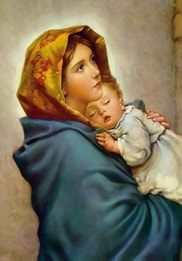

In part 1 of this 2 part series, Chris and Meagan take a deep dive into the history and devotion of the Brown Scapular......
[00:00:00] Is your garage door off track? Is it closing crooked? Or is it making unusual sounds? Call Lift Doctors. They're on duty 7 days a week serving the Memphis and Germantown community. From Broken Springs to new installations, Lift Doctors offers same-day service in most situations. With upfront pricing, no service fees, weekend fees, or emergency fees, Lift Doctors will get your garage back on track and at the right price.
[00:00:27] Lift Doctors enjoys a 5-star Google rating and is standing by to help you today. Give them a call at 901-231-9449 or visit liftdrs.com. Memphis is built on strong communities and thoughtful design helps those communities thrive. For more than 50 years, A&F Architects has partnered with local organizations to create meaningful spaces throughout our city.
[00:00:55] Our work can be seen all across Memphis, from the Overton Park Bike Gate and the Overton Park Shell to works at the University of Memphis, St. Louis Catholic School, and a dozen other local churches. We are also proud partners of FedEx, International Paper, St. Jude, Baptist Memorial Hospital, and the Baptist Medical Group.
[00:01:17] If you're planning a renovation, expansion, or new facility, A&F Architects is ready to bring your vision to life. Learn more at anfa.com. Your employees aren't just showing up for a paycheck. They're showing up for their families, their futures, their peace of mind. Are your benefits showing up for them? What if you could offer them better benefits and reduce your costs? Higginbotham designs employee benefit packages that actually matter.
[00:01:46] Health coverage that promotes good health, retirement plans they can count on, and support when they need it most. Great employees deserve great benefits, and great businesses know where to find them. Higginbotham. Higginbotham.com. Buttered Toast and The Holy Ghost, where we love to serve up the weird but wonderful slices of Catholic tradition. Now, here's my mom and dad, Megan and Chris.
[00:02:18] Welcome to Buttered Toast and the Holy Ghost. I'm Chris. And I'm Meagan. I almost said I'm Chris there for the first time ever. Whoa. I just feel like, and I'm Chris. Wait a second. It's like Pat and Pat. I'm Chris and Chris. I like panicked. I think I'm just like overall in a panicky mood today, because I was looking at my notes, and literally the thing we're talking about in the very first line I misspelled, and so then I had to like panic Google to see if I had it spelled right through the whole thing, and I said it correctly. Oh, man.
[00:02:46] And then it'll be like teleprompters that read the wrong thing, and like they don't even break the stride. They just say the wrong word. Do you remember that scene in Smile? I still think about that. Smile, too, from time to time, where she's reading the teleprompter, and it like freezes, and then she starts seeing the thing in the background. For those who haven't seen Smile, I won't spoil anything. Yep. But I think that's like a recurring nightmare for me is like a teleprompter just not working, but I'm like delivering an important speech somewhere. That you didn't write, so you have no reference for it, and you're like, wait a second. What are the words?
[00:03:15] Or is there something really offensive on there or something, and I tick everybody off? I don't know. What if, you know, the churches that have like the Gloria and the Creed and stuff that get displayed up on the wall? Yeah. What if that just broke one day, and the people were like, I don't remember what comes next? Oh, so I was going in the direction of like when people carved it in ancient times, what if they spelled the words wrong? Like you can never forget. And then 2,000 years later, we find it, and we're like, this is illegible. Someone's like scratched it all. We don't understand.
[00:03:43] I'm sure there's an existence of a typo somewhere where someone's like, nah, forget it. Send it. Send it. We're not going to wait for another like stone from Carthage. I'm sure that exists. Listener. Samarians know what we're talking about. Yeah. If you've ever been, man, there was like a lot of craft. I guess they didn't have anything else to do, but focus on that. Anyway, we're like way off target already. You know, it is what it is. It's a bit of a tangent. What do we have today? Okay. I'm glad you asked because I was waiting for you to ask because that like gets me into the correct mindset for what. Okay.
[00:04:13] So for today, I want to talk for a long time, just setting the expectation here. This is going to likely be a two part. I have so many thoughts on the scapular, the devotional scapular. Specifically, we're going to talk a lot about the brown scapular since that's the one that's probably the most famous and the one that I'm the most familiar with. Are there other scapulars? There are other scapulars. I'll touch on them briefly and I'm going to go over, we're going to start with like, what is a scapular to begin? And that's the thing that I spelled wrong at the top of the page. I wrote, what is a scapular?
[00:04:43] What is a scapular? It's nothing. I've made it up. Ah, dang it. Extra. There's a stray L in there. And I'm like, I know that's wrong, but then I went and Googled it just to make sure I had it right everywhere else in the notes. But that's just me. Welcome to behind the scenes. Hey, you know, we're not perfect. Yes, we're not. We're just people. So yes, the scapular. What do you know about scapulars, Chris? We'll start with you as an audience proxy.
[00:05:06] Yeah, there are two pieces of cloth, usually having some kind of image of, if I remember correctly, the Blessed Virgin that are connected by two basically strings. You wear it around your neck. It's largely uncomfortable. Is it uncomfortable? It's pretty uncomfortable. It has a tendency to either fall back in your shirt and kind of choke you. He's leaning back to illustrate. That's why he went quieter on the mic. Like he's like full on in body.
[00:05:35] Or it falls forward and like rubs on your belly and that feels weird. Either way, there are promises that are associated with the wearing of the brown scapular. I cannot remember what they are. There's like five to ten? No, more than that. Really? Yeah. How many? Like 16? 17? I have the actual number in here somewhere, but I'm not about to go through all the notes like out of order. That's going to just really mess me up. So audience, you get to wait for this answer. Just like me. Spoiler alert.
[00:06:05] Definitely more than five. Less than a hundred. That's the ballpark I'll give. Of approved ones. Specifically approved ones. So, okay. The scapular. No extra L. Don't do that. That's what we're talking about today. So you did a great job, by the way, describing exactly what it is. I'm very impressed. I feel like you might have lifted that off Wikipedia even. It was so well formulated. It was just you going off the cuff, though. Did I say it was brown? Because I did.
[00:06:34] I think I forgot. Well, sometimes they're brown. They're different colors. That's the different. I think there's a white one and a green one. Yeah. We all have to see. We all have to see. I have all this. Just let me take you on a journey. So it's from a Latin phrase. We always like to start with the Latin where we can. What do you think the Latin phrase is from or refers to? Well, I know there's a bone or part of your body called the scapular. So I'm guessing it's where the scapular rests. You're completely right. So it's from the Latin scapula, meaning shoulder. So it can refer to multiple things in the medical standard.
[00:07:03] Like that's going to refer to your shoulder bone. Don't monks have a garment that they wear that's also called a scapular that functions differently? They do. And in fact, you're like so good. You're like calling all my segues before I had to bring you in. In fact, the first thing I say is basically the definition, like the big picture definition for the scapular and what we're talking about today is a piece of cloth worn in devotion by some religious orders. So in fact, the scapular, the miniature version, that's exactly what that comes from. Okay.
[00:07:32] So it's a garment, first and foremost, worn over the shoulders that originated, many think, as a work apron. So if what I want you to picture is like this big like Y-shaped garment, and you've seen it in pictures, whether you've realized it or not. Think about like friars, like from Robin Hood. You know, like that big round piece of the top that kind of narrows at the bottom that goes over the tunic and is then cinched with a girdle. Bonus points. If you listen to last week's episode, you know what a girdle is or a rope around like that's a pretty typical uniform.
[00:08:01] I guess I always thought of that as like the cloak or maybe I'm... It's called a scapular. That's what it is. I mean, that's by definition. Some of them have hoods later on, but it's mostly just that Y-shaped piece and it varies order by order. Okay. Full send. I am thinking about Friar Tuck from Robin Hood. That's valid. I brought that up because we all know what that looks like. Yeah, exactly. We can all picture him. Specifically the men in tights one. Yeah. No, actually I was thinking of the animal from the Disney version. I think he's a badger. I don't remember. It says a lot about us.
[00:08:30] Which Robin Hood we reference mentally. Depends on how you were raised. No one referenced the Prince of Thieves though, so that's okay. I love Prince of Thieves. It's really good. Is that weird? No, it's really good. It had... Oh, Alan Rickman. Did it really? Yeah. Oh, he's the sheriff. He's evil. Mm-hmm. Okay. Anyway. And Morgan Freeman. And Morgan Freeman is... We're losing the sauce. You are so losing the plot. I love this though. Okay, so you'll like this. We'll bring this back down to earth.
[00:08:55] So the scapular, it was likely made popular by item 55 of the Rule of St. Benedict. This was actually the first reference we have that monks should wear a scapular. And so since many, many orders to this day base their rule set off of the rule or they evolved from it in some form or fashion, it shouldn't be surprising that many, many orders utilize a scapular as a major piece of their habit. Thanks, St. Benedict. Yeah.
[00:09:24] I mean, it's amazing how many just picked this up. And again, that's where people think since Benedict was so big on work, right? As a form of prayer, the idea that this came from, they would wear a work apron while they were working. And the scapular basically, again, what I want you to picture is worn over the tunic and with a cincture as a monk or a tunic cincture and veil as a nun. So nuns also often wear them. Okay. Right? So we'll think about that later when we talk about the Carmelites. So what do you think the scapular symbolizes?
[00:09:53] You had to guess. I mean, work, probably penance because if the monks are wearing it, it's this big garment. It's probably uncomfortable to wear. It's probably a way for them to focus through physical discomfort and, you know, really tune into their prayer and attention. Yeah. I think that's a great way of looking at it. There's not like any one answer, but we can be informed by like Christian tradition. Specifically, my brain went here was that it references obedience and the yoke of Christ. Hmm.
[00:10:23] So think of like an animal yoke. It goes over at something. It's a burden you wear on your shoulder. So again, calling back to work, like you said, it also represents manual labor. So on nuns and monks would often have to throw them over their shoulders while doing prayer and penance, like even while like plowing a field. Right. So it was like a physical reminder. Yeah. That certainly likely served as a reminder that their toil brought them closer to Christ. So anytime you had to do work involving the scapular, it would be a form of prayer or penance, just like you said.
[00:10:50] A similar example would be like the sincture. It traditionally represents chastity, right? Gird your loins. It's their prayers that go along with putting it on, literally tethering oneself to the virtue. In that instance, the scapular likely served a very similar function for things like obedience and penance. It's weird because there's like no symbolism in the church at all. Yeah. It's such a shame. It's such a dry. It's weird that this is so steeped in it. The one example we have of symbolism as a way to bring us closer to Christ. So that never caught on.
[00:11:20] So then the second meaning of scapula, we've established like the primary definition of it is the devotional item, a sacramental. So what you referenced earlier. And if needed, it's helped to define what a sacramental is. It's similar in root to the word sacrament, but it's not a sacrament in that it doesn't infer, make sure I'm saying this right. It doesn't make you holy by its nature, but it clings to the holiness of other items.
[00:11:47] So it's an item or an action instituted by the church for the benefit of the faithful. So a sacramental can be any symbol like saying grace before meals or praying a rosary that draw us to or remind us to salvation through Christ. Makes sense. So they make life holy is the way of looking at it, like small devotions that we can do. So that's a sacramental. So in this case, the sacramental of the scapular, it's worn specifically by lay persons. I want you to remember that. And it's usually, this is what it's formed of. You did a great job describing it.
[00:12:16] Two small rectangles of cloth, often made of wool, that are joined by two bands. So two strings, like you said. And so we see this early example of lay persons wearing that scapular around the 11th century. It started around then. And it was used as a great honor that the orders would bestow on the lay persons who made up confraternities and serve as a particular order. So you'll hear there are those called sometimes third orders, but it's basically I am, you know, say I'm an abbot and I have an order.
[00:12:46] And then I want to include the local townspeople in service or they want to volunteer with me. This would be a way to confer honor upon people who have a particular devotion to that order. And now at this point, the scapular we're talking about is the traditional, not the monastic scapular that we were just talking about historically. We're talking about the scapular that became the brown scapular. Yes. In between. So if the modern day one is the tiny one and it's pretty small and the ancient one was
[00:13:15] the big one, this is a medium one. Medium. So it was smaller than the regular scapulars, but much larger than what we have today and much more ornate to be seen. So the monks would have their big scapulars. And then, like you said, the laity would wear this, this downsized one. Yes. As a, as a, as a, an honor. Hey, they're on our team. Like, Hey, there are water boy on the baseball team. Like that's been. So like my Cubs Jersey. Yeah. Like your Cubs Jersey. It's kind of like a watered down version of the real thing, Joe.
[00:13:44] No, if the Cubs gave you their Jersey to say, Hey, this is our guy. He may not be on the team, but he's our guy. And we want him included in all the festivities. Well, not to nitpick, but when you're in the crowd, you play a role in the victory of the game. There you go. If you're on your team. If your energy is good, it sounds an awful lot like superstition, Joe. Well, okay. I do wear the Brown scapular. Superstitious. Well, I actually have the metal. Okay. Nevermind. You've got the metal one on. We were talking about this right before. So, um, so one quick thing.
[00:14:13] And then I do want to take a break to give our listeners a second to kind of catch the breath. Cause I'm throwing a lot of info out there, but it was basically picture this kind of medium version as a miniature version of the habit. Right. So we have the habit and then the miniature version, just like Joe's Cubs Jersey. It's like a, you know, kind of stepped down from the real deal, but still meant to symbolize that, that a person could wear when interacting with the order on the order's behalf. Right. So if you were going as like a, um, like an attorney or something. Yeah.
[00:14:42] An attorney might be someone who maybe they helped them out, like, you know, zoning the area for their, their monastery. I don't know. But that would be their way of conferring that. Hey, this guy's on our team. So it's, it, Pope Leo the 13th even declared that lay persons wearing a scapula were entitled to participate in the indulgences or like basically special treatment or shortcut to heaven. If we want to think about it that way, granted by the order they served in an 1883 encyclical. So this is a pretty old practice.
[00:15:09] I know 1883 is kind of modern compared to some of what we talked about earlier in the 11th century, but it was a practice from, you know, hundreds of years ago that they just kind of confirmed like, no, this has specific benefits conferred on those. And you get to participate, like Joe said, in the team's victory. In this case, it's for the order. It was a great analogy, by the way. There you go. So keep that in mind. Scapulars were the devotional ones, miniature version of the habit. The original scapular was part of the habit. Okay. And that's the thought I want to leave people with before we go to break really briefly.
[00:15:38] And then when we come back, we're going to talk specifically about how that further evolved into things like the brown scapular in modern day. The little miniature ones. Little guys. Okay, cool. The Memphis Catholic Radio Network is supported by listeners and sponsors like you. If you'd like to support Memphis Catholic Radio for as little as $10 a month or advertise your business, visit us at memphiscatholicradio.com.
[00:16:08] All people of goodwill are invited to enjoy Christian hospitality at Our Lady Queen of Peace Retreat Center. Tucked away on 140 acres in Stanton, Tennessee, just 40 minutes east of Memphis, our budget-friendly retreat center features 27 private bedrooms, a beautiful chapel, meeting spaces to accommodate up to 100, and a commercial kitchen and dining room. You'll love over three miles of walking trails and all of our secluded spots, both indoors and outdoors for quiet contemplation and prayer.
[00:16:37] The retreat center is also an ideal location for corporate planning sessions, team building, and leadership development. Our peaceful setting offers the perfect opportunity to gather, collaborate, and renew your sense of purpose. Our Lady Queen of Peace Retreat Center was built for all of us to enjoy. To learn more, visit us at olqpretreats.com and contact us at 731-548-2500.
[00:17:01] Faith and charity are key elements of life, but are they at the center of your financial decisions? With Knights of Columbus, you can pursue financial stability, but more importantly, you can do so in a way that is compatible with Catholic teaching. For more than 140 years, we have helped families guard their financial future. With our array of life insurance products, we have expanded our offerings to include retirement
[00:17:28] annuities, long-term care insurance, and disability income insurance. Let your faith inspire your financial decisions. Terms and conditions apply. Learn more by calling Lance Jolly at 901-277-1023. Welcome back to Buttered Toast and the Holy Ghost. I'm Chris. And I'm still Megan. Love you still Megan. Love you still Chris.
[00:17:58] No, just Chris. Just Chris. Just Chris. Well, that's good. Now we got that lovey-dovey stuff out of the way. How are you feeling after all my scapular talk? Pretty good. Can you believe there's more? I can't, but I can't wait. Because we haven't even touched on the brown scapular. Yeah, we haven't even gotten to modernity. That's like a great word that's underutilized, but then also you feel like you hear it everywhere. And also I can't say it. Modernity. The modern age.
[00:18:25] The modernity term that I have here is tiny. That's the phrase I want you to come back to for a scapular. It's much tinier than the original we were talking about. I would imagine. Yeah. So we're talking like, all right, let's get into the modern scapular, I guess. Modern. It's tiny. It's about two inch rectangles. Yep. Some of them are like one inch. Some of them are made of metal. I've had really small ones. Really teeny tiny. I was wondering if you could like, there are people that get them tattooed. Does that count? I think that's, I don't think that counts.
[00:18:55] Oh, maybe there'll be an approved tattoo one one day. We don't, we never say never. The church hasn't excluded it. It's kind of one of the spirit of the law things than letter of the law, I think. Maybe one of our children will start an order where you get it tattooed. I'm just saying. I'll get it tattooed. I don't care. I know you will if you're around for that. That's great. The modern scapular. Smaller than the medium ones. Two inch rectangles. Attached by bands. And often embroidered to depict something related to its devotion. You were getting at that earlier with like the pictures of Mary. I think there's one with St. Michael too.
[00:19:25] There's one with St. Michael. Yes. And an image of Mary, the sacred heart. Okay. Like a lot of different things. They're going to have different devotions. So the design is there to call back to. And again, think of the, it as an image that makes life holier because you can reflect on it. So here was the magic number. There are 18 approved scapulae, which is the, I guess, technical plural form of scapulars. Love it. It's probably like octopus and that you can say it multiple ways and it's fine. Scapulae sounds cool though. Scapulae. Scapulae is really cool. Yeah. That's fun to say. In the church today.
[00:19:55] So some are from as early as the 12th-ish century that we have or as late as the 20th century. Which one's the oldest? Around the 12th is when we start seeing the official, like this is the canon set of scapulae that are approved. But the devotion debate. Let's try that again. We're struggling today. The devotion dates back to prior to that. This is just when they were put into, okay, this is defined as a scapular. Got it. This tiny guy right here.
[00:20:24] And then you can wear it. Does that make sense? Like the difference? Because we have like things preceding that, that only monks wore and then we kind of got into this practice and they went, okay, well let's make this an official thing. So they didn't, in the medieval age, they didn't have like the brown scapular or the white scapular. They just had like. They did. But maybe it was by per order or. Yeah. So like think, for example, some of the earlier ones, like the brown scapular is a pretty old one around the 12th century, right?
[00:20:52] We have history of people utilizing that as a form of prayer from around that time. And so we date that scapular back to the 12th century. So could we say that like the brown scapular is the oldest? Yeah, I think it was one of the oldest. There might've been one older, but the brown is by far the most popular and one of the oldest, I don't have the whole list in front of me here. And I don't want to bore our listeners with like reading off the, what each one is, but there's a whole list of them. So feel free to explore and learn about each one. Maybe this show will inspire you to look more into scapulars.
[00:21:22] That's my hope personally. So like their predecessors, these modern ones, quote unquote, modern with the church is always such a weird term. It's like, it's not like the first century, but it's not like 2011 here. Right. I think it's a little older. When you have 2000 years of church history, it gets a little. Yeah. Yeah. And many of the traditions are drawn on things even older than that, which I always found fascinating. So these modern ones, like their predecessors, the original ones were engaged by those third
[00:21:51] orders, the confraternities or simply lay persons with an affinity or interest in that order. Like you and me. Yeah. Like we would, we would be eligible. Pretty much any listener here would be eligible to wear a scapular. Sure. Most of them have specific instructions or enrollment responsibilities associated with them. This is often called investment. I thought it was kind of a fun, like in the same way that you would invest in nun or monk, like you put vestments on them, you would do the same with your little mini version of that. So in order to gain access to that specific grace that comes from those particular devotions,
[00:22:21] this investment is often not overly complex. I don't feel intimidated by it. It can be something as simple as like saying a specific prayer and then having a priest bless the scapular, which more they'd be more than happy to do. I can't speak on behalf of all priests, but I'm pretty sure they're required to kind of bless things within reason. Our priest listeners, I guess, can write in and tell me if I'm wrong. I think that's accurate. I've never had them turn me down to bless anything. That's what I'm saying. Yeah. You go up to them, they'll be like, heck yeah. Can I say heck yeah? Heck yeah is fine, I'm sure. Sorry. Can I just give a quick shout out? Go for it. Father Gio is really good.
[00:22:51] If folks, if you ever encounter Father Gio and you want something blessed, he makes, he stops what he's doing. He makes sure he does it properly. He even usually gets some holy water. He makes the right kind of ceremony out of it. That's awesome. So I like his style when he blesses stuff. That's good. I never thought about it. Good old Father Gio. Good old Father Gio. Good young Father Gio. I feel like he's really young. I don't want to get that impression from him. He's got a youthful spirit. And that's awesome. I think that's great to have a particular flavor. Because it is a big deal. And it's sort of something that can feel mundane when you are like a Catholic.
[00:23:20] And you kind of take advantage of that all the time. But the idea of like, hey, I'm giving this special graces by associations. I'm making this holy for you. It's really kind of rad, honestly. Yep. So I love that. Yeah. Shout out to Father Gio. If you ever need something blessed, he sounds like he's your guy. And he'd be more than happy to do it for you. So this is an important thing, though. And I want to differentiate between this because this is something that's important to me. That these are not magical or exclusive items. We just talked about making them holy.
[00:23:48] And holiness, by definition, is inclusive, not exclusive. That's a really important distinction. It's designed to draw people in, not keep people out. So think of them as a membership to a very open but specific devotion or membership meditation, like a group project that we can all work on together. They are a physical reminder of the wear to the devotion to something like the Trinity, St. Michael, Mary, and so on. So it's a very inclusive club. Anyone can join.
[00:24:16] You just got to sign up for the membership card and get that card punched, I guess. And then you're good to go. So and I love to draw the distinction between like magical thinking. That's something that's really personal and important to me as someone who's been diagnosed with OCD and who grew up religious. Sometimes you'll hear about, unfortunately, people who develop a lot of trauma around that because like the rituals can give a false sense of safety. And that's actually... Almost like a superstition? Yes. Is that what you're... I joked about that to poor Joe earlier when he wasn't being super... He was just having fun.
[00:24:46] But yes. So for those who don't know, aren't familiar with the disorder, obsessive compulsive disorder, one of its hallmark manifestations is repetitive thoughts, things that you're like you're super focusing on, or like rituals that you engage in to like have magical thinking or create safety. If I do this thing, then X other thing will happen. Yeah. Or if I don't do this thing, then bad things will happen. Correct.
[00:25:11] And prior to getting diagnosed, I just thought this was normal to assume like if I didn't flip the light switch seven times or go up every other stair that my little sister would die in a car accident. Like I thought that was normal. So apparently it's not. And if you're having those thoughts, hey, know that it's very treatable and you can live a very happy full life. But where there is a potentially dangerous or harmful overlap of these two things is when you latch on to something like
[00:25:37] some of the devotions associated with like the brown scapular that are unfortunately harmful. You can start slipping into this idea of like, well, if I wear my scapular, I'll be safe. I will not go to hell. I will be perfectly preserved from all things harmed. And that's where I just want to give a cautionary. And that's why it's like so important to me to separate the two. Yeah. Well, thank you for being vulnerable. Can you, I'm sure you're getting into this, but can you give us a little bit more of what that looks like?
[00:26:05] So like what the promise and stuff? Like what the devotions are that could potentially, I don't want to say mislead, but I can't think of a better way of thinking about it. Yeah, we'll absolutely talk about that. I don't want to oversell that. What I want to do is first focus on some of the really positive things about this and a little bit about the history. And then we can separate what I guess feels like fact versus fiction. And even then there's going to be a bit of discernment on the part of the listener.
[00:26:32] I'm here to just present facts, historical facts. And from there, we can talk about like what feels likely and also what the church specifically states in regards to the brown scapular and the promises associated therein. Discernment of the wearer makes me think way back to an older episode, which is the well-formed conscience. Yeah, it requires a well-formed conscience. I think the church does a beautiful job of addressing this particular devotion.
[00:27:00] She does a great job of drawing attention to what we do versus what we, by forbidding us from not doing something. So the example I always use is the rubrics, which is like the red writing, and it's in the germ, right? That tells you the priest will do this. But it says, you know, the priest will hold his hands in such a fashion. It does not say the priest should not ride a pogo stick down the aisle, right? They leave that up to, we're just going to tell you what to do.
[00:27:25] And if it's not specifically stated in there, it's pretty safe to assume we shouldn't be adding to or taking away from it. You are doing this, more of this. So she handles the brown scapular, I think, really very similarly. And we'll talk about that as we kind of get to the end of her story. But I really want to focus on the positive at first. Let's do it. I want to focus on the brown scapular.
[00:27:52] I think, like, personally, I was always a little, like, resistant to it because of my unfortunate experience growing up with it. And this honestly made me more interested in the scapular and the similar devotions, not less, after kind of digging into, well, what's actually out there? And what's the deal? Well, let's hear it. Sweet. So let's wrap this part up specifically talking about the brown scapular, the institution of this very popular devotion.
[00:28:21] So to understand it, it's helpful to understand the order that it actually is a part of. So remember, if we think about the brown scapular, it's a miniature version of a particular order. And that order is the Carmelites. Most people have heard about them. It's not the Carmelites, like the color brown or the candy, but it's the Carmelites. They're very sweet people. And it comes from, it's really cool history. The order that established it lived on Mount Carmel. I was going to ask.
[00:28:48] Which is where St. Elijah purportedly, like, lived out of caves there. And it's Carm and then Dash El. So El, we know, means God or of God. So it means, like, garden or vine of God. That's fantastic. Yeah. Yeah. So the brown scapular was, uh, order, the Carmelites was a mendicant order, which is my new word to learn. Um, it's from Latin for beggar. It's basically an order that begs for food and it turns, or you're closing your eyes like you're trying to remember, and like return for blessings and food.
[00:29:15] Like they basically live on other generosity. The earth here, yeah. Yes. And again, it traces its origins and traditions back to the spiritual fatherhood of St. Elijah. And this order lived as the first hermits on Mount Carmel, preaching from the same caves that Elijah and Alicia preached from. Later, they formalized into a full-fledged order during the 13th century or so. That was when they were like established. okay and one tricky thing about this order is that the stories vary a bit there's a lot of um
[00:29:45] overlap in stories some different so some say 13th centuries when they were official but some things reference them in the 12th century we're going to go back and forth a little bit just know it's fuzzy and there aren't better records out there is what i've learned and that could honestly be a span of like 10 years if we're being real yeah we really don't know so just keep that in mind but like one guy we're talking about specifically lived like in 1165 which so i'm like established he was i guess at the cusp or the start of that order and we'll talk about that too
[00:30:14] so it started as a mendicant order eventually had to kind of set down roots they built their very first chapel on mount carmel and it was dedicated to our lady which is actually where our lady of saint carmel comes from it doesn't come from the brown scapular it comes from that first um church that they established and they devoted it to the lady of the house was there an apparition there or purportedly sort of more on that in a bit it's a great question we're gonna put a pin in that for
[00:30:39] now okay so just a couple of fun facts about them uh before we get into specifically the promise made to that prior that i referenced earlier we have to know that they were um the best term i found for it was beset by rivalries from other mendicant orders apparently begging was a very very uh competitive field dang and they often found themselves very disliked by local priests specifically why do you think
[00:31:05] that was well i'm guessing the priests wanted tithes at their church and if the the parishioners are giving their tithe money to the mendicants sometimes it was absolutely financial financially motivated the carmelites were also granted i thought this was interesting exemption from the pope for what's called episcopal authority and they were able to travel into towns to preach hear confessions and beg for elms so they were able to like go place to place all over without the same roots and so the
[00:31:33] priest looked at it like okay i'm servant to this town i live here in this town and like i could have like 13 mendicants i guess coming around like you said asking for alms saying prayers doing things that i ordinarily would do for my people and they're kind of basically encroaching on my territory so they didn't appreciate them diverting those funds or interacting freely with those parishioners this made them wildly unpopular i found lots of sources talking about this so there's a little tea here they were so harassed in fact that a papal bull was published by innocent the fourth asking local
[00:32:03] priests to accept them around the 13th century like you guys have got to be cool you got to be nice to each other and then a reminder was literally sent out six months later because people refused to comply with it like they were still getting bullied so october of that year they said no really you've got to you've got to gotta be nice to these guys so that's that's the carmelites that's their order that's their history so they came from kind of a weird like very fuzzy background contentious background
[00:32:31] and loosely defined until around that 13th century marker so so i think we'll stop it there because the next thing i want to get into is like a whole thing yeah and i just want to be aware of obviously our listeners time and i'm excited to go into the weeds a little bit on this next part but overall what have been your thoughts so far and what i've shared um i don't want to say conflicted but uh i'm having a
[00:32:55] lot of thoughts i've worn the scapular before um i've worn it taken it off numerous times over the course of my life um like i said i'm i'm vaguely familiar with the promises but i never did the research to know more about it so this is really interesting and uh the fact that you kind of approached it with the same mindset and now uh are way more open to it makes me very curious so yeah i'm really excited
[00:33:24] to to hear more let me say it lest anything be confusing i am very pro scapular after learning more about this in fact i'm probably more pro scapular than i ever have been because with this like kind of exploration of the subject it's granted me a lot of clarity which i'm excited to share with our listeners for anyone who else has been kind of on the fence weirded out or like hey what's that about so it is an amazing tradition that confers a lot of grace and is a great awesome thing to participate
[00:33:49] that really has deep roots within our church and it's a great way to maybe add a little more holiness a little more spice back into like your your holy life like something cool or new to try out and see what it can do for you so yeah well listeners if you have thoughts on the scapular please let us know yeah if you're typing out an angry comment or something about how i feel i would love to hear it i love a little bit of tea this this is the perfect intersection of like a little bit of tea
[00:34:13] but also ultimately it has a happy ending so it's fine but yes listeners write in call in joe wants me to remind everybody that we can in fact re-record our voice notes is that right so if you mess up yeah if you're if you're worried that oh man if i call and i mess up the voice message you can record it as many times you want yeah and once it's once it's the way you want it you just hit send or whatever the heck it is so yeah and my counterpoint is please don't be afraid you heard
[00:34:39] me stutter over my words about 11 times tonight so like we're cool we're already chill we're already besties you and i don't worry about it i would love to hear whatever you guys have to say comment like share subscribe do all that fun stuff it helps us find our audience and and share some of this podcast goodness with everybody i know i'm always looking for the next great podcast so feel free to write in with some of those um as always we're looking for patrons and sponsors of the show we've got a variety of tears so don't be afraid to reach out about that as well and then you can find more at this
[00:35:07] catholic radio.com we have an app in the store and a lot of sister shows that you may enjoy if you like ours so until next time thanks for listening and there it is